



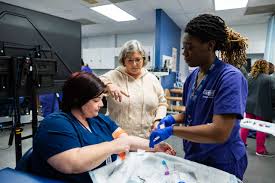
In an ageing population with increasingly complex medical needs, the demand for highly skilled healthcare assistants (HCAs) has never been greater. These frontline workers are the backbone of hospitals, care homes, nursing agencies, and community teams, providing essential hands-on care that directly impacts patient dignity, recovery, and quality of life. Two areas of training have become particularly critical in recent years: comprehensive healthcare assistant training and specialised stoma care training. When delivered effectively, these programmes do more than tick compliance boxes; they transform capable individuals into confident, competent professionals who can deliver safe, person-centred care in even the most challenging situations.
The Foundations: What Good Healthcare Assistant Training Should Cover
Effective Healthcare assistant training is far broader than basic moving-and-handling or personal care skills. Modern programmes recognised by the Care Quality Commission (CQC) in England, or equivalent regulators across the UK and Ireland, now incorporate the Care Certificate as a minimum standard and then build significantly upon it.
Key components of high-quality training include:
- Person-centred care and dignity
- Communication skills (including with patients who have dementia, learning disabilities, or speech difficulties)
- Basic clinical observations (blood pressure, pulse, temperature, respiratory rate, oxygen saturations)
- Infection prevention and control (with heightened emphasis since COVID-19)
- Safeguarding vulnerable adults and children
- Basic life support and emergency response
- Assisting with nutrition, hydration, and elimination needs
- Understanding common long-term conditions (diabetes, COPD, heart failure, dementia, etc.)
- Mental capacity and best-interest decision making
- Record keeping and escalation protocols
The best courses blend classroom theory with supervised clinical practice, ensuring learners can transfer knowledge into real-world settings. Many providers now use “skills labs” with high-fidelity manikins and actors playing patients to simulate difficult conversations and clinical scenarios before trainees ever touch a real patient.
The Growing Importance of Specialist Stoma Care Training
One of the most life-changing events a patient can experience is waking up with a stoma (colostomy, ileostomy, or urostomy) after major bowel or bladder surgery. For the patient, the stoma represents both survival and a complete upheaval of body image, daily routines, and intimacy. For the healthcare assistant, it represents one of the most intimate and technically demanding aspects of personal care.
Yet historically, Stoma care training has been patchy. Many HCAs report learning “on the job” from more experienced colleagues with variable accuracy, or simply being handed a manufacturer’s leaflet. This is no longer acceptable.
Specialist stoma care training (ideally delivered or validated by stoma nurse specialists or accredited colorectal teams) now covers:
Anatomy and Physiology
- Understanding why different types of stoma are formed
- The difference between colostomy, ileostomy, and urostomy output
- Normal versus abnormal stoma appearance (colour, protrusion, oedema)
Practical Appliance Management
- Correct measuring and cutting of flanges
- Skin assessment and prevention of peristomal skin complications (the commonest reason for hospital readmission)
- Choosing the right pouching system (one-piece vs two-piece, drainable vs closed, convex vs flat)
- Emptying and changing routines tailored to output type
- Managing high-output stomas and food bolus blockages
Complications and Red Flags
- Recognising signs of ischaemia, necrosis, retraction, prolapse, parastomal hernia
- Identifying peristomal skin conditions (allergic reactions, infections, pyoderma gangrenosum)
- When and how to escalate urgently
Psychological and Lifestyle Support
- Body image and sexuality discussions
- Dietary myths vs evidence-based advice
- Travel, exercise, clothing, and intimacy tips
- Signposting to peer support (e.g., Colostomy UK, Urostomy Association, Ileostomy Association)
Increasingly, training also includes working with modern accessories: adhesive removers, barrier films, seals, belts, and irrigation systems for suitable colostomy patients. Many courses now incorporate “stoma simulation” vests so learners experience what it feels like to live with an appliance 24/7 – a powerful empathy-building tool.
The Evidence Base: Why Investing in Training Pays Off
Research consistently demonstrates the return on investment:
- A 2022 study in the Journal of Wound Care found that structured stoma care education for non-specialist staff reduced peristomal skin complications by 42% and unplanned appliance changes by 31%.
- The Association of Stoma Care Nurses UK reports that patients whose regular carers have received formal training report significantly higher satisfaction and fewer emergency call-outs.
- NHS trusts that mandate the Care Certificate plus specialist modules for HCAs working on colorectal wards have seen reductions in length of stay and readmission rates for new ostomates.
In regulated inspections, CQC and Healthcare Improvement Scotland frequently cite inadequate stoma care training as a factor in “Requires Improvement” or “Inadequate” ratings for safety and caring domains.
Who Should Access These Training Pathways?
- New healthcare assistants – ideally before or within the first 12 weeks of employment
- Existing staff moving to surgical, gastroenterology, urology, or oncology wards
- Community and care-home workers supporting patients discharged with a new stoma
- Bank and agency staff who may be deployed anywhere at short notice
- Family carers (many stoma nurse teams now offer parallel sessions)
Choosing the Right Course
Look for programmes that:
- Are mapped to the Care Certificate and Skills for Health frameworks
- Include both theory and assessed practical competencies
- Are delivered or quality-assured by clinical nurse specialists
- Provide post-course support and access to helplines
- Issue a certificate recognised by major employers and agencies
Many NHS trusts now commission bespoke packages, while commercial providers offer open courses nationwide. Online theory with local practical consolidation days has become popular since the pandemic, though hands-on stoma skills still require face-to-face supervision.
The Future: Towards Mandatory Specialist Modules?
Professional bodies including the Royal College of Nursing and the Association of Stoma Care Nurses UK have called for stoma care to become a mandatory module for any HCA likely to encounter ostomates – which is almost everyone in acute or elderly care. Some integrated care systems have already moved in this direction, particularly after high-profile serious incidents linked to poor appliance management.
Conclusion
Quality healthcare assistant training forms the bedrock of safe, compassionate care. Adding targeted stoma care training transforms good HCAs into outstanding ones, capable of delivering technically proficient and psychologically sensitive support to some of the most vulnerable patients in the system.
In an era of staff shortages and increasing patient complexity, cutting corners on training is a false economy. Investing in skilled, confident healthcare assistants who can perform intimate personal care with competence and kindness is not just good practice – it is a moral imperative and a clinical necessity.
Patients living with a stoma deserve nothing less than carers who have been properly prepared for the privilege and responsibility of supporting them. When we get training right, we don’t just change appliances – we change lives.
