



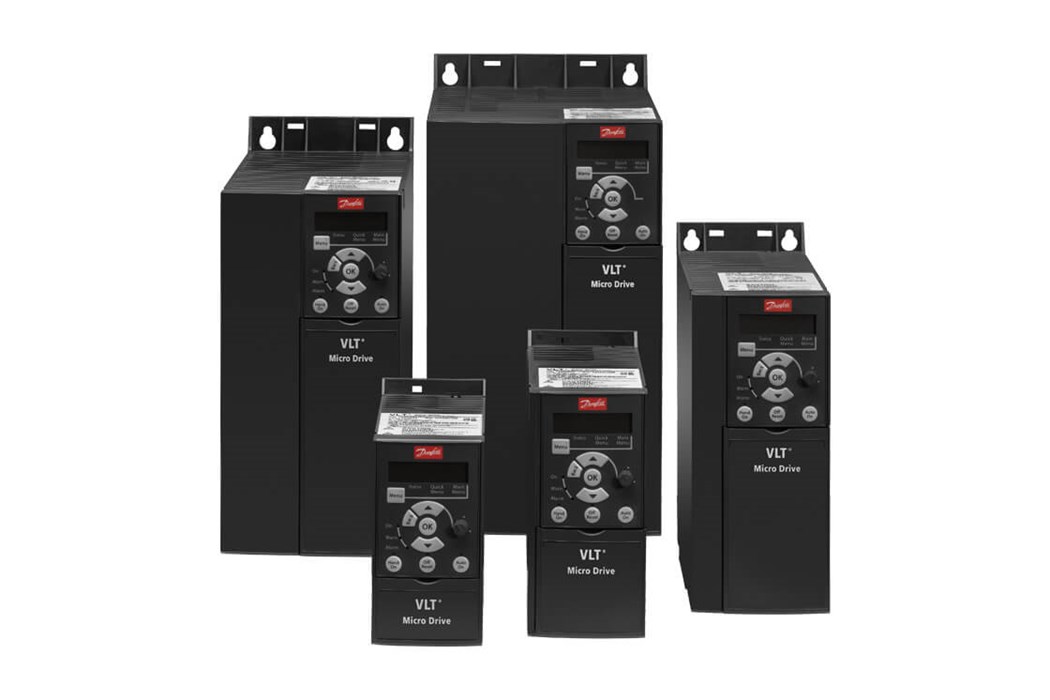
In modern industrial automation, few components are as universally important as the variable frequency drive (VFD). Whether you are running a simple conveyor, a complex HVAC system, a pump station, or a high-performance machining center, the VFD is the intelligent heart that controls motor speed, saves energy, protects equipment, and improves process quality. Among the many manufacturers in this space, Danfoss has consistently stood out for its engineering rigor, reliability, and innovation. When professionals around the world talk about robust, cost-effective, and future-proof drive solutions, the conversation almost inevitably turns to Danfoss drives — and more specifically, to the hugely popular Danfoss FC51 series.
In this in-depth article, we will explore the history of Danfoss in the drive market, the technology that makes their VFDs special, the unique positioning of the Danfoss FC51 (also known as the VLT® Micro Drive), its technical specifications, typical applications, programming and commissioning tips, and why — even many years after its launch — it continues to be one of the most specified small drives on the planet.
A Brief History of Danfoss Drives
Danfoss entered the frequency converter market in 1968 — one of the very first companies in the world to do so. The iconic VLT® brand (the name stands for “Variable Limit Torque”) was born, and over the next five decades Danfoss launched generation after generation of groundbreaking drives: VLT® 5, VLT® 2800, VLT® AutomationDrive, iC7, and of course the compact VLT® Micro Drive family that includes the FC51.
Today, Danfoss Drives is one of the three largest VFD manufacturers globally, with production facilities in Europe, North America, China, and India, and an installed base of well over 20 million drives.
What Sets Danfoss Drives Apart?
Before diving into the FC51 specifically, it’s worth understanding the common DNA that runs through virtually all Danfoss drives:
- Coated PCBs (standard from the smallest to the largest models) for harsh environments
- Built-in RFI filters (Class A1/B or C1/C2 depending on model)
- Integrated DC choke (from ~1.5 kW upwards) for harmonic mitigation
- Automatic Energy Optimization (AEO) and Automatic Motor Adaptation (AMA)
- Robust 50 °C (122 °F) ambient rating without derating on most models
- Real fieldbus options (Profinet, EtherNet/IP, BACnet, Modbus RTU/TCP, etc.)
- Intelligent heat management and “book-style” narrow design for side-by-side mounting
- One of the best MTBF figures in the industry
These features are not marketing gimmicks — they translate directly into lower total cost of ownership and fewer callbacks for installers and system integrators.
Introducing the Danfoss FC51 (VLT® Micro Drive)
Launched in the late 2000s and still in full production in 2025, the Danfoss FC51 is the entry-level, general-purpose micro drive designed for applications from 0.18 kW to 22 kW (single- and three-phase 200–240 V, and three-phase 380–480 V).
Despite its “micro” designation, the FC51 is anything but a toy. It contains almost all of the sophisticated control algorithms found in its bigger brothers (FC301/FC302 AutomationDrive), but in an ultra-compact, price-optimized package.
Key Technical Highlights of the Danfoss FC51
| Power range | 0.18 – 7.5 kW (1×200-240 V), 0.25 – 22 kW (3×380-480 V) |
| Overload capacity | 150 % for 60 s (normal duty) |
| Switching frequency | 1 – 16 kHz (automatic derating above 4 kHz) |
| Built-in brake chopper | Standard from 1.5 kW upwards |
| RFI filter | Integrated C2 / C3 (optional C1) |
| PI controller | Built-in (process PID) |
| Logic rules engine | Simple 4-step programmable logic |
| Motor technologies | IM (asynchronous), PM, SynRM |
| Communication | Modbus RTU standard; optional Profibus, DeviceNet, CANopen, Ethernet |
| Protection rating | IP20 (chassis); optional IP21/NEMA1 kit |
| Ambient temperature | –10 °C to 50 °C full load (no derating up to 45 °C) |
| Coating | IEC 60721-3-3 class 3C2 (standard); 3C3 optional |
Why the FC51 Became a Global Best-Seller
- Price-to-performance ratio When the FC51 was introduced, it was priced aggressively against Asian “economy” drives yet offered coated boards, real PID control, built-in brake chopper, and Danfoss reliability. Many OEMs and panel builders switched overnight.
- Side-by-side mounting & small footprint The drive is only 70 mm wide up to 2.2 kW, and even the 22 kW unit is just 150 mm wide. This saves enormous panel space.
- One ordering number philosophy Almost everything is included in the basic unit. No need to remember 15 different option codes just to get a brake chopper or RFI filter.
- User-friendly interface The famous Danfoss LCP (Local Control Panel) with graphical display and copy function is available as an option, but even the blind version with potentiometer and buttons is extremely intuitive.
- Process PID as standard Many competing micro drives charge extra for a PID license. The FC51 has always included a full-featured process controller.
- Automatic Motor Adaptation (AMA) With one key press the drive measures the connected motor and optimizes all current-loop parameters — a huge time-saver on site.
Typical Applications for the Danfoss FC51
The FC51 is found literally everywhere:
- Small conveyors and packaging machines
- Fans and blowers in HVAC
- Pump stations (constant pressure, level control)
- Gate and door drives
- Mixers, agitators, and centrifuges
- Woodworking machinery
- Textile machines
- Simple hoists and cranes (with brake chopper)
- Solar pumping systems (special firmware variant)
- Compressor control in refrigeration
Because of its robust design and coated electronics, it is also very common in harsh environments such as food & beverage wash-down areas (with IP66 decentralized versions) and wastewater plants.
Programming and Commissioning Tips
- Quick Menu vs. Full Parameter List 95 % of applications can be commissioned using only the 15 parameters in the Quick Menu.
- Use the “Copy” function on the LCP Once the first drive is set up, you can copy the entire parameter set to the next 20 drives in minutes.
- Enable Automatic Energy Optimization (par. 1-03) Saves 5–15 % energy on partially loaded motors with no downside.
- For pump applications Set par. 22-20 to “Low Flow Detection” and enable the built-in dry-run protection — no external flow switch needed.
- Flying start If the motor might already be spinning when the drive is enabled (e.g., fan windmilling), enable par. 1-71 “Flying Start”.
- Ethernet commissioning Even the basic FC51 can accept an MCA 120 Ethernet/IP option card, allowing you to program it from a web browser.
The Future: Is the FC51 Still Relevant in 2025?
Danfoss launched the newer iC2-Micro series in 2023–2024 with functional safety (STO), higher switching frequency, and built-in PLC via IEC 61131-3. Yet the FC51 remains in full production and is still the default choice for the majority of simple applications for three reasons:
- Price (the FC51 is significantly cheaper)
- Huge installed base and spare-part availability
- Proven long-term reliability in the field
Many panel shops keep both lines: FC51 for cost-sensitive standard applications and iC2-Micro when STO or advanced motion is required.
Conclusion
More than 15 years after its launch, the Danfoss FC51 continues to be one of the most successful variable frequency drives ever designed. It strikes an almost perfect balance between cost, functionality, size, and legendary Danfoss durability. For anyone building or maintaining small to medium machinery, specifying a Danfoss drive — and in most cases specifically the Danfoss FC51 — is still one of the safest and smartest decisions you can make.
Whether you are an OEM standardizing on a platform, a system integrator looking for minimum callbacks, or an end-user wanting maximum uptime, the FC51 delivers day after day, year after year.
