



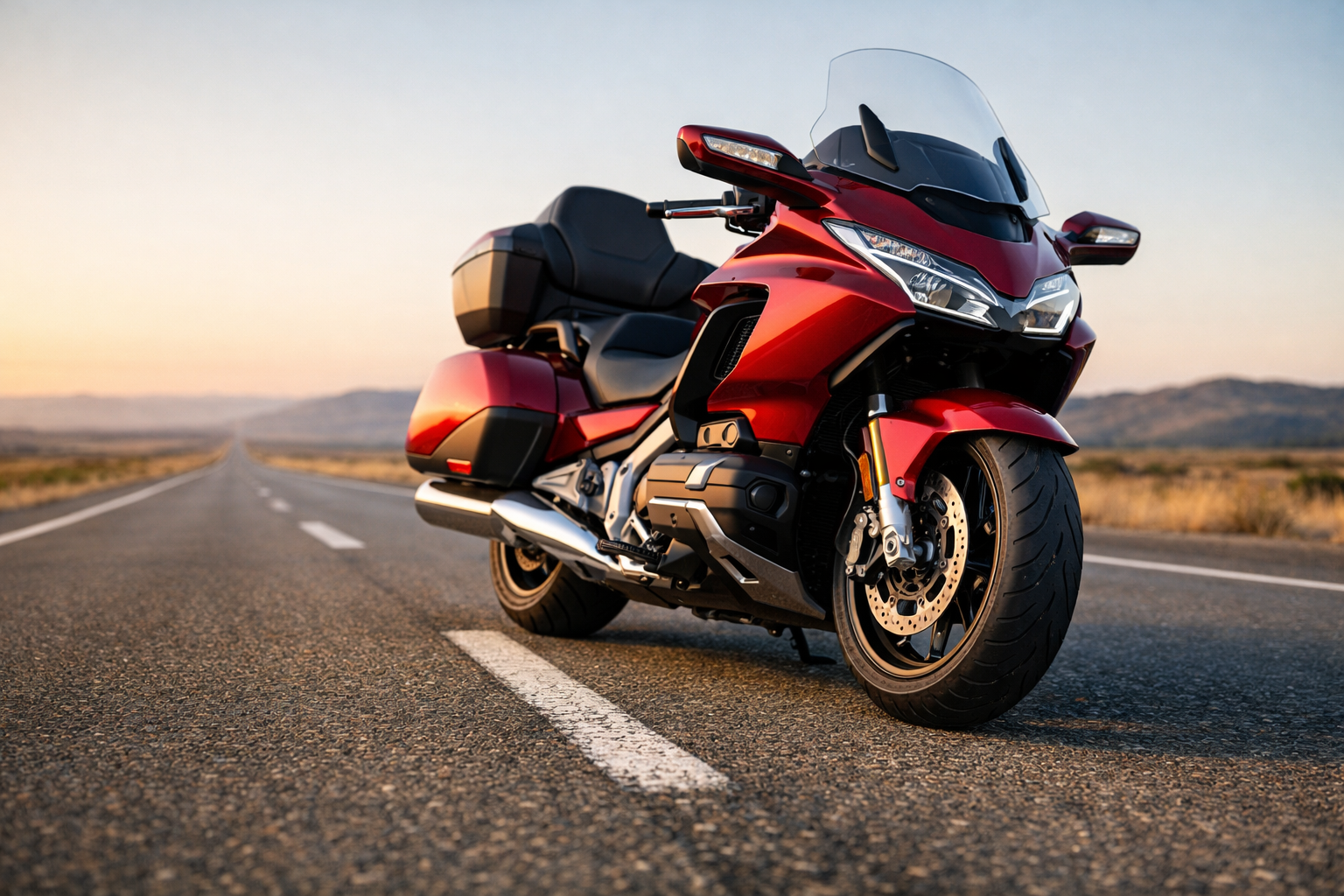
When you are riding a heavy touring bike, tyres are not a consumable. They affect your steering feel, braking confidence, and comfort on long rides. One thing became clear very quickly when I assisted a friend in getting his Gold Wing ready for a summer run with motorways, mountain rain, and two-up luggage. An incorrect tyre selection can make a good motorcycle feel queasy, imprecise, and exhausting.
That is why riders often seek advice like ShinyWing touring motorcycle tyres when they want a straightforward, trustworthy starting point without the marketing noise.
Why Heavy Touring Bikes Need a Different Tyre Mindset
Rubber faces different demands on a large touring machine. Weight is higher, loads stay constant, and riding conditions change all the time. You might spend an hour tracking straight on a motorway, then dodge through bumpy back roads, then crawl around a fuel stop in traffic.
A tyre that feels fine on a lighter bike can become unstable, develop scalloped wear early, or lose wet grip sooner on a heavyweight tourer.
The real goal is balance. You want high speed straight-line tracking, predictable cornering, strong wet grip, and high mileage without sacrificing comfort. That means choosing tyres built for load capacity, heat control, and controlled wear.
The Tyre Factors That Matter Most on a Gold Wing Style Tourer
Load Rating and Construction Stability
Start with the load index and speed rating recommended for your motorcycle. Under-rated tyres get punished on heavy touring bikes. The tyre might fit, but you can still end up with extra flex under braking and a squirrelly feel mid-corner.
Touring-focused carcass construction is designed to stay stable even when the bike is loaded.
Compound Design and Wear Control
Look for multi-compound touring designs. These typically use a harder centre compound for mileage and slightly softer shoulders for cornering grip. On big bikes, this helps reduce rapid centre wear from motorway riding while keeping confidence when leaning.
Wet Grip and Cold Temperature Confidence
Touring riders do not always get to choose the weather. Tread pattern, silica-rich materials, and water drainage channels help keep the bike steady on smooth roads, painted surfaces, and in the rain.
Cold performance also matters if you ride early mornings or through winter conditions.
Heat Management for Long Motorway Days
Tyres can overheat during long high-speed runs. Overheating increases wear and can make the bike feel vague. Touring tyres are designed to handle sustained cruising better than sporty tyres, especially when carrying heavy loads.
Types of Touring Tyres and Which Fits Your Riding Style
Sport Touring Tyres
This is the sweet spot for many Gold Wing riders who still want confident cornering. Sport touring tyres often provide quicker steering and strong wet grip with reasonable mileage.
If your rides include winding roads, this type is usually worth a look.
Pure Touring Tyres
These focus on stability, comfort, and long wear. Steering response can feel slightly less sharp, but the bike tracks straight very well at speed. Rear tyre life can be better in regular motorway use.
If you do long routes and often ride with a passenger, this is a natural fit.
Budget Touring Options
A lower price can be tempting, but it often comes with shorter life, reduced wet grip consistency, or noisier running. A value tyre may be fine for occasional riding, but for regular long-distance touring, behaviour in rain and under load matters more than saving a little upfront.
My Real Life Decision Framework
When selecting tyres for a heavy tourer, I ask riders three questions.
1) How often do you ride two-up with luggage?
If the answer is often, stability and wear control matter more than sharp steering.
2) How much of your riding is motorway?
If it is mostly long straight cruising, quick turn-in matters less than wear life and heat resistance.
3) What is your weather reality?
If rain is common, prioritise wet grip and stable braking feel.
This simple framework avoids the most common mistake: choosing a tyre that is excellent in one situation but stressful in another.
Tyre Pressure, Setup, and Maintenance for Better Mileage
Many touring riders blame the tyre when the real issue is pressure discipline. On heavyweight motorcycles, slight under-inflation can increase heat and accelerate shoulder wear. Too much pressure can reduce grip and comfort.
Check pressures cold and check them often, especially before travel.
Also pay attention to suspension setup. If rear preload is too low for your load, the bike can feel wallowy and the tyre may wear unevenly. Finally, do not overlook alignment, wheel balance, and valve condition. Small issues are amplified on long tours.
Signs You Chose the Wrong Tyre and What to Change Next Time
If the bike feels like it falls into corners, you may be dealing with an unsuitable profile or uneven wear. If you get front-end cupping or vibration, it could be pressure habits, suspension settings, or a tyre that does not suit your use.
If wet braking feels stiff or unsettled, choose a touring compound with stronger wet grip next time.
Keep short notes on mileage, pressures, and conditions so your next set is a smarter choice.
Conclusion: Choose Confidence First, Then Chase Mileage
For a heavy touring motorcycle, the right tyre is the one that stays calm under load, keeps grip in the rain, and feels predictable even when you are tired at the end of a long day.
Do not overthink brand hype. Match the tyre style to your riding, keep pressures consistent, and let stability and wet traction guide the decision. When comparing options, use real-life load, real-life weather, and real-life mileage as your filter.
If you want a reference point you can trust, ShinyWing can be a solid starting point for your research.
FAQs
What are the best tyres for a Gold Wing style heavy touring bike?
Most sport touring or pure touring tyres suit heavy tourers best because they are designed for higher loads, stable tracking, and heat management over long distances. The best choice depends on how often you ride two-up, how much motorway you do, and how often you ride in rain.
How long do touring tyres last on a heavyweight motorcycle?
Tyre life depends on load, road conditions, throttle habits, and pressure maintenance. Rear tyres usually wear faster than fronts on heavy touring bikes, especially with regular motorway riding. Monitoring pressure and setting correct suspension preload can improve life and wear consistency.
Is it better to use the same tyre model on front and rear?
Most riders should run matching sets because tyres are designed to work together for handling and braking. Mixing models can create odd steering feel or inconsistent grip, especially in wet conditions, unless you clearly understand why you are mixing and what behaviour you want.
What tyre pressure should I use for long distance touring?
Use your motorcycle manufacturer’s recommended pressures as your baseline. Only adjust if you have a specific reason and understand the trade-offs. Big motorcycles are sensitive to pressure changes, so checking cold pressures before major rides is one of the easiest ways to improve handling and tyre life.
When should I replace touring tyres?
Replace tyres when tread reaches the legal limit, wear bars are near, or you see cracking, bulges, or ongoing pressure loss. Also replace them if wet grip drops significantly or handling becomes unsafe even if some tread remains, because ageing rubber can lose performance over time.
