



A practical approach is to begin with simple, manufacturer-recommended checks and stop as soon as the problem requires specialized diagnosis.
Contents
ToggleStart With the Thermostat
The thermostat is one of the first things to check when a furnace does not seem to be working. Make sure it is set to Heat, the desired temperature is higher than the current room temperature, and the fan setting is appropriate.
If the thermostat uses batteries, replacing weak batteries may restore normal operation. Also check whether a programmed schedule or another setting is preventing the furnace from calling for heat.
These are simple checks that generally do not require professional equipment.
Inspect the Furnace Filter
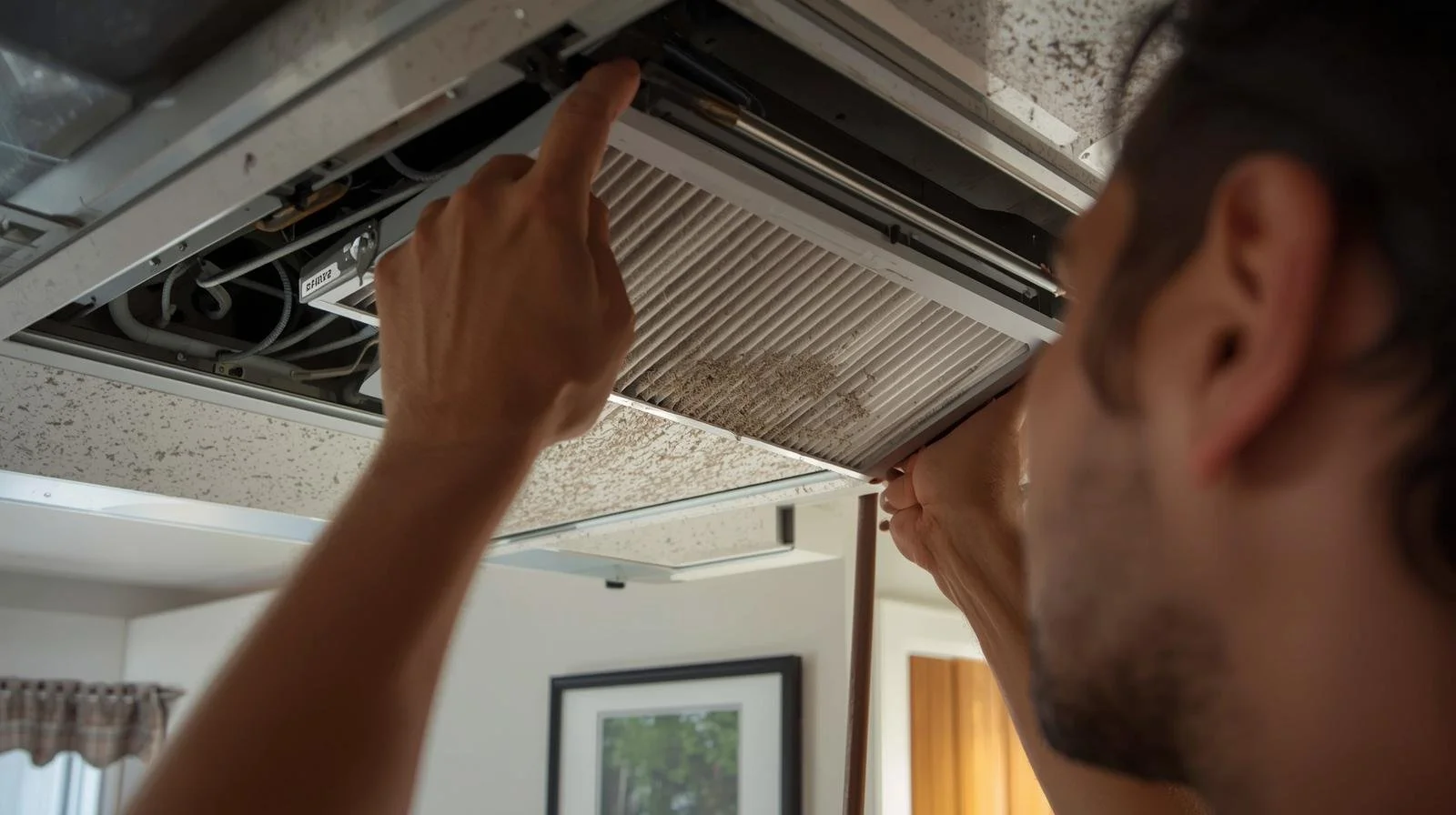
A dirty air filter is another common reason for heating problems. When a filter becomes heavily clogged, it can restrict airflow and contribute to overheating or safety shutdowns. Carrier recommends checking filters regularly and replacing them according to the manufacturer’s instructions.
Replacing an accessible filter is usually a reasonable DIY task. However, if the furnace continues shutting down after a clean filter is installed, the underlying issue may require professional diagnosis.
Check the Power Supply
A furnace can appear completely broken simply because its electrical supply has been interrupted. Check whether the furnace’s nearby power switch is turned on and whether the appropriate circuit breaker has tripped.
A breaker can generally be reset once. If it trips again, repeatedly resetting it is not a good DIY solution. Repeated electrical trips can indicate a deeper electrical or equipment problem that should be inspected by a qualified technician.
Make Sure Vents Are Open
Look around the home for closed or blocked supply registers and return-air grilles. Furniture, rugs, curtains, and other objects can restrict airflow.
If airflow remains weak even after obvious obstructions are removed and the filter is replaced, there may be a problem with the blower, ductwork, controls, or another furnace component. Those issues generally require professional troubleshooting.
When DIY Furnace Repair Is Reasonable
Homeowners can often handle basic maintenance and troubleshooting tasks such as:
- Adjusting thermostat settings
- Replacing thermostat batteries
- Replacing a dirty air filter
- Checking that the furnace power switch is on
- Checking a tripped breaker once
- Opening blocked supply registers
- Checking the owner’s manual for basic troubleshooting instructions
The important distinction is between checking accessible components and repairing internal furnace components. Basic troubleshooting may identify a simple problem, but it should not turn into an attempt to repair unfamiliar equipment.
When You Should Call a Professional
Professional service is appropriate when the furnace has problems involving ignition, gas, combustion, electrical components, internal controls, the blower motor, or the heat exchanger. These components can require specialized testing and knowledge.
For example, ignition failures can involve an igniter, flame sensor, pressure switch, limit switch, control board, or other components. Replacing parts based only on symptoms can waste money and potentially create additional problems.
For homeowners who need furnace repair Orange County, getting a qualified HVAC professional involved can be especially important when basic troubleshooting does not restore reliable heating.
Never Ignore Gas or Carbon Monoxide Warning Signs
Certain symptoms should end DIY troubleshooting immediately. If you smell gas, hear a suspected gas leak, see abnormal flames or soot, or your carbon monoxide alarm sounds, leave the home and seek appropriate emergency or utility assistance from outside.
A damaged heat exchanger is particularly serious because it can potentially allow carbon monoxide into the home. Carrier recommends professional inspection when a heat exchanger problem is suspected.
Do not attempt to repair gas lines, combustion components, or a suspected cracked heat exchanger yourself.
What About Strange Furnace Noises?
Not every unusual sound means an emergency, but unusual noises should not automatically be ignored. Rattling can sometimes come from loose panels or ductwork, while loud ignition sounds may indicate a combustion or burner problem.
If the noise is persistent, unusually loud, or accompanied by poor heating, repeated shutdowns, burning odors, or other warning signs, professional inspection is the safer choice.
Should You Repair or Replace the Furnace?
A professional diagnosis can also help determine whether repair makes sense or whether replacement should be considered. Furnace age, repair frequency, operating performance, efficiency, and the condition of major components can all influence that decision.
A single minor problem does not necessarily mean the furnace needs replacement. On the other hand, repeated failures or a major component problem may justify comparing repair and replacement options.
A Simple DIY-or-Pro Decision Guide
Before calling for service, ask yourself:
Is the problem limited to a thermostat setting, filter, blocked vent, power switch, or similar basic issue? If so, a simple homeowner check may solve it.
Does the problem involve gas, combustion, internal electrical components, ignition, repeated breaker trips, or a major mechanical component? Call a qualified HVAC professional.
Is there a gas smell or carbon monoxide warning? Leave the home and seek emergency assistance rather than troubleshooting the furnace.
Final Thoughts
You do not necessarily need a technician every time a furnace stops working. Basic checks can sometimes identify simple problems and restore normal operation. However, there is an important boundary between homeowner troubleshooting and furnace repair.
For Orange County homeowners, the safest strategy is to handle straightforward maintenance while leaving gas, electrical, combustion, and internal mechanical repairs to qualified professionals. If basic checks do not solve the problem, professional furnace repair Orange County services can help identify the underlying cause and restore dependable heating without unnecessary guesswork.